
Disclosure: This article contains an affiliate link. If you purchase through it, Top10ReviewPoint may earn a commission at no additional cost to you. Our assessment is based on the product’s public sales information, available product details, and independent research. We have not independently verified every advertised feature or performance claim.
AI assistants are becoming another place where people discover brands, compare services, and ask what to buy. That creates a new visibility question for marketers: when a potential customer asks ChatGPT or another assistant for a recommendation, does the answer mention their business—or a competitor? SYNTRA is marketed as a tool for monitoring and improving that kind of presence. In this SYNTRA review, we look at what the software is designed to do, the features described for it, its likely use cases, pricing considerations, strengths, limitations, and who should consider it.
What Is SYNTRA?
SYNTRA is presented as an AI search visibility and Generative Engine Optimization (GEO) platform. Rather than focusing only on traditional search rankings, it aims to help users see whether selected AI assistants mention their brand, website, or offer when responding to relevant questions. Its sales page names ChatGPT, Google AI, Grok, Claude, Perplexity, and Gemini as target platforms.
The important distinction is between monitoring visibility and controlling recommendations. A tool can run prompts, collect answers, identify brand mentions, and suggest improvements. It cannot force an independent AI system to recommend a particular company. SYNTRA should therefore be viewed as a visibility research and optimization toolkit—not a guaranteed traffic source or an automatic sales machine.
How SYNTRA Is Supposed to Work
The basic workflow starts with defining a business or brand and the market it wants to reach. The user then selects relevant keywords or buyer questions. SYNTRA is described as generating prompts, checking AI responses, and organizing the results so users can see when their brand appears and which competitors are mentioned instead.
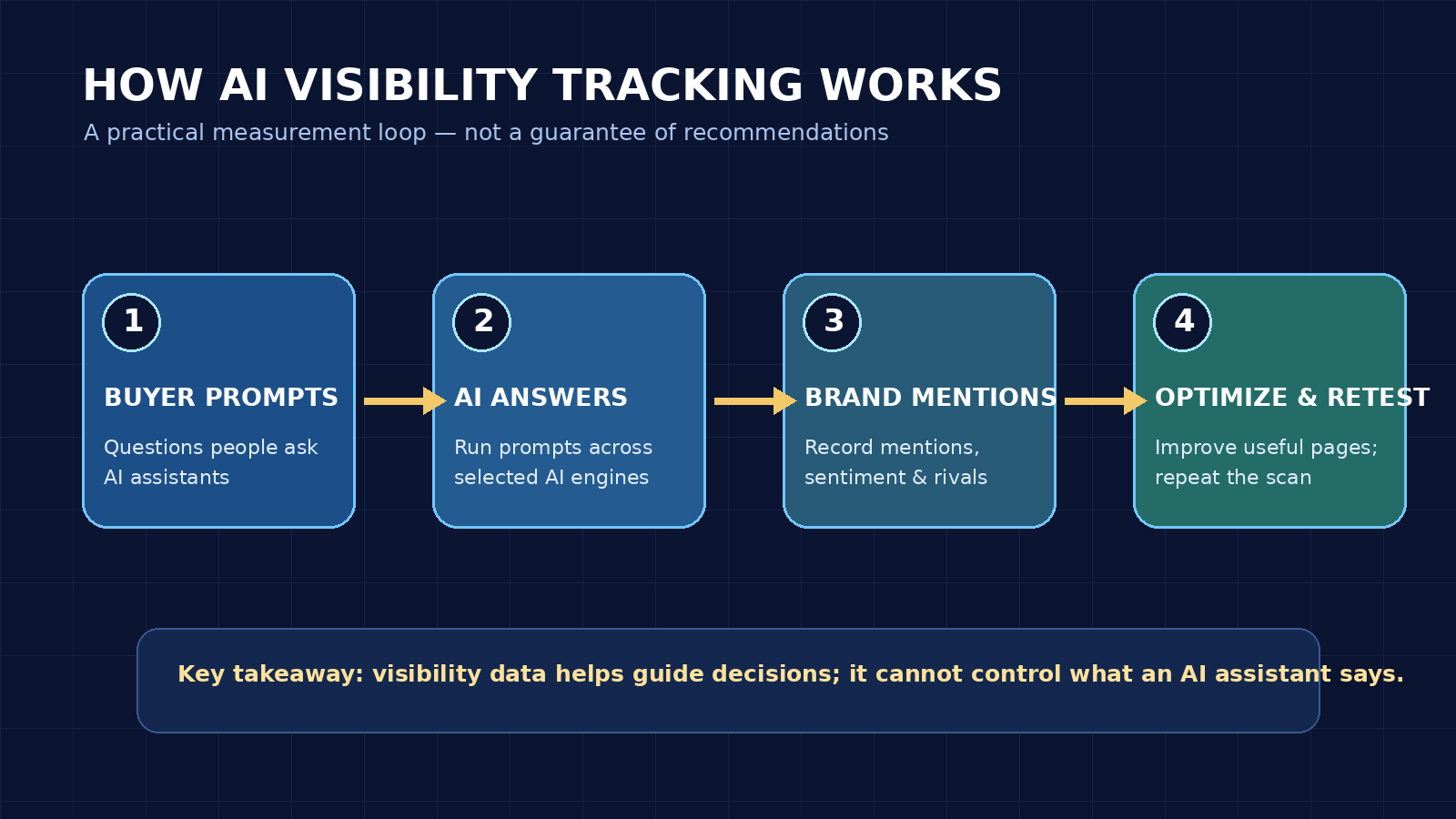
That process can help turn a vague question—“Does AI know my business?”—into a set of specific observations. For example, a local service provider could test questions such as “Who offers reliable emergency plumbing in Austin?” An ecommerce store might check “What are the best lightweight travel backpacks for frequent flyers?” The value depends on whether the prompts represent genuine customer intent and whether the results are interpreted carefully.
Key SYNTRA Features
1. AI Prompt and Keyword Research
The platform is described as helping users create realistic questions based on a niche, product, service, and target audience. This matters because people rarely search only with short keywords when using conversational AI. They may ask for comparisons, recommendations, alternatives, or solutions to a detailed problem. Building a useful prompt set is a practical starting point for visibility monitoring.
2. AI Visibility Scanning
SYNTRA’s central promise is to check selected prompts against AI platforms and report whether a brand is mentioned. Results can help users identify queries where they appear, where they are absent, and where competitors are named. The sales page lists six AI destinations, while an independent product walkthrough describes a scanner workflow across ChatGPT, Claude, Gemini, and Grok. Because the public descriptions are not perfectly aligned, buyers should confirm the exact engines and scan limits included in the version they purchase.
3. Competitor and Sentiment Insights
Visibility is not simply a yes-or-no question. A brand might appear as the first recommendation, be listed as one option among several, or be mentioned in a negative context. SYNTRA is described as showing answer details, competitor names, and sentiment-related scoring. This can help a marketer understand the context of a mention instead of treating every mention as equally valuable.
4. Website and LLM Readiness Checks
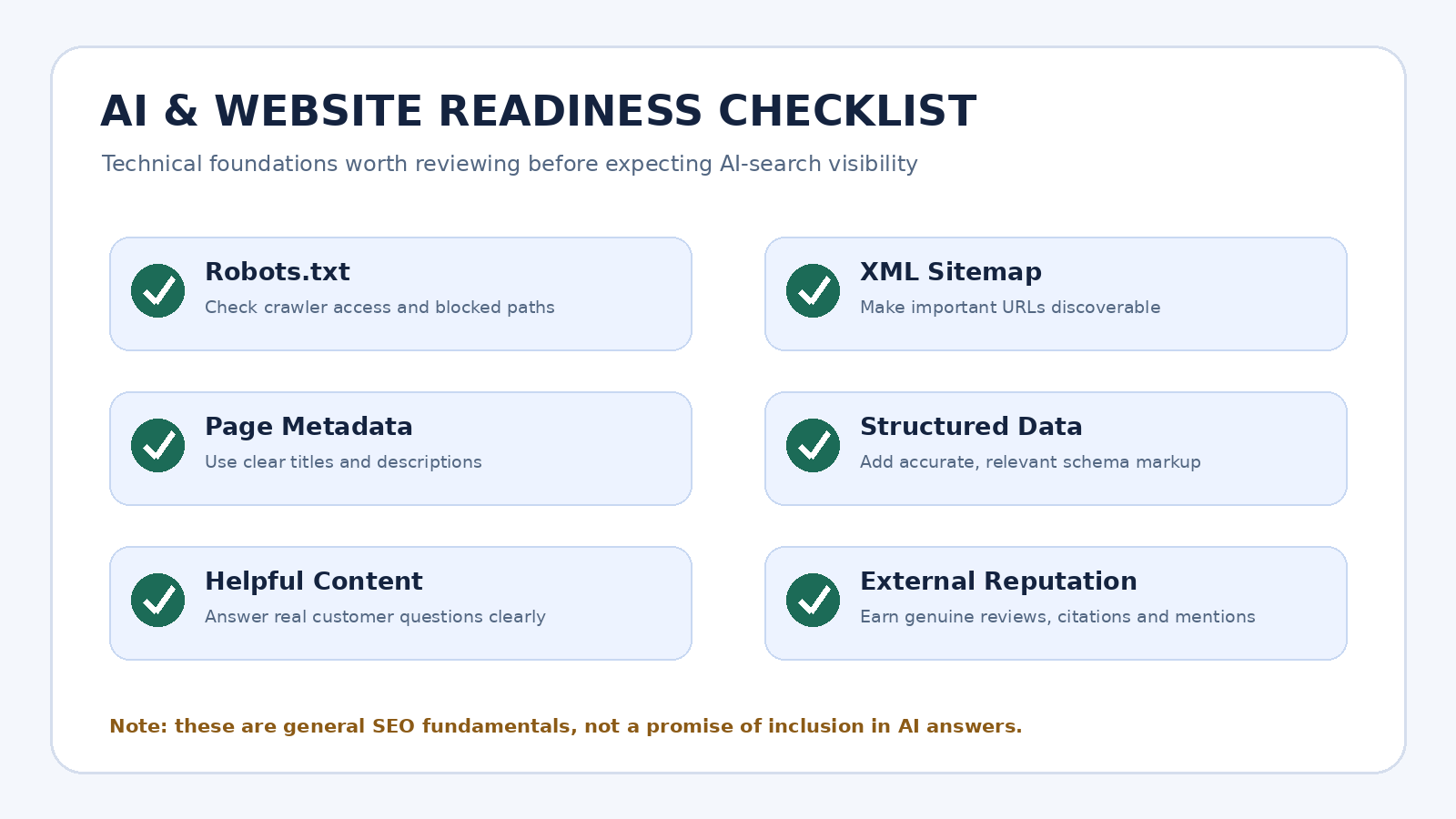
The product information describes checks for technical items such as robots.txt, sitemap availability, page metadata, crawler access, and structured data. These are sensible areas to review when improving a website’s accessibility and clarity. However, a readiness score should not be confused with a ranking guarantee. Passing a technical checklist does not mean an AI assistant will select a site as a source.
5. Optimization Recommendations
SYNTRA is also described as organizing recommendations into an action hub. Instead of leaving users with a collection of scan results, the idea is to highlight possible next steps across content, technical SEO, AI signals, and competitor research. This can be useful for beginners who need a prioritized starting point. The recommendations still need human review: not every automated suggestion is appropriate for every site or industry.
6. Schema and Content Tools
Public product walkthrough material describes schema generation and an AI content generator that can prepare drafts with headings and FAQs. These features may save time when creating a first draft or producing structured data. They do not remove the need to fact-check content, use accurate business information, validate markup, and edit copy for originality and audience relevance.
7. Keyword and Product Visibility Checks
The described keyword area connects target phrases with AI answers and mentions on the user’s own pages. An AI shopping component is also described for adding product details and testing whether AI answers recommend those products. Ecommerce sellers may find this interesting, but they should verify which shopping platforms and product types are supported in their account before relying on it.
Potential Benefits of SYNTRA
- A clearer view of AI mentions: It can help replace guesswork with a repeatable set of prompt checks.
- Competitor discovery: Seeing which businesses are named in relevant answers can reveal brands worth studying.
- One workspace: Monitoring, audits, content assistance, and schema tools are presented in a single platform.
- Beginner-friendly direction: A guided workflow and prioritized recommendations may help users who are new to GEO.
- Potential client-service use: If the included license permits commercial work as advertised, consultants may be able to offer AI visibility reports to clients. Review the actual license terms before reselling or delivering services.
Limitations and Things to Check
The most important limitation is that AI answers are dynamic. The same question can produce different results at different times, across locations, accounts, models, and search settings. One scan is only a snapshot. A more useful approach is to run a consistent prompt set repeatedly, record changes, and compare the results over time.
Second, visibility is not the same as website traffic. A brand can be mentioned without receiving a click, and a mention does not automatically translate into leads or revenue. Any claim of instant or guaranteed visitors should be treated cautiously.
Third, the sales page names more platforms than the independent walkthrough’s described scanner workflow. Confirm the exact supported models, frequency, number of prompts, usage limits, and whether scans consume credits or have other restrictions. Fourth, automated audits and content suggestions are starting points. Users still need to implement changes, publish useful material, earn credible third-party references, and monitor outcomes.
Finally, do not assume that a file such as llms.txt or a particular schema type is a shortcut to AI recommendations. Google’s published guidance says the established SEO fundamentals remain relevant for its AI search features and that special AI files or special optimizations are not required for inclusion. Useful, reliable, people-first content remains central.
SYNTRA Pricing: What Should Buyers Expect?
The SYNTRA sales page promotes a discounted one-time payment and contrasts it with a stated regular price. A recent independent walkthrough reported a $12 front-end checkout total, including LaunchPad service and delivery charges, and described a coupon that reduced the total. It also listed optional upgrades and a bundle. Those figures are time-sensitive: the launch window described in that walkthrough was November 3–7, 2026, which has already passed as of this review’s date. The checkout may now show different prices, fees, coupons, or upgrade availability.
For that reason, treat any advertised amount as provisional until you see the final order summary. Check whether the core product is a one-time payment, what usage limits apply, whether future services require additional fees, and whether the optional upgrades are necessary for your intended workflow. Do not buy an upgrade simply because it is presented as a limited-time deal.
The public sales page advertises a 30-day money-back guarantee. Before ordering, read the current checkout and refund terms so you understand the start date, request process, and any conditions that apply.
Who Should Consider SYNTRA?
SYNTRA may be worth investigating for small business owners who want to understand whether AI assistants mention their company, affiliate marketers researching how offers appear in recommendation answers, ecommerce sellers exploring product-level visibility, and freelancers or SEO consultants who want an additional audit topic for client conversations.
It may be less suitable for someone who has no established website or brand, expects guaranteed sales, wants a complete replacement for traditional SEO, or has no time to review scan results and implement improvements. It is also not a substitute for analytics, conversion tracking, reputation management, or a well-maintained website.
SYNTRA vs. Traditional SEO Tools
Traditional SEO platforms commonly focus on keyword rankings, backlinks, technical health, and organic search performance. AI visibility tools add another measurement layer: what selected AI systems say when given selected prompts. The two approaches are complementary rather than mutually exclusive. A business still needs crawlable pages, clear information, useful content, strong reputation signals, and a sound technical foundation.
For context, Google’s Search Central documentation explains that its AI features use the same broad search foundations and that there are no additional special requirements for appearing in AI Overviews or AI Mode. This makes it unwise to abandon proven SEO work in favor of a tool that promises to “replace” it.
Is SYNTRA Worth It?
The answer depends on what you expect from it. If you want a structured way to test how selected AI assistants mention a brand, inspect competitors, and organize basic optimization tasks, SYNTRA’s advertised feature set addresses a real marketing question. Bringing several related tools into one interface could be convenient, especially for a beginner or a small business with a limited software budget.
However, the software should not be purchased on the assumption that it can place a link inside AI answers on demand or deliver predictable buyer traffic. The more realistic value is in monitoring, research, and workflow support. Its usefulness will depend on the quality of your prompts, the accuracy of its scans, the supported engine coverage, and the work you do after reading the reports.
Final Verdict: Should You Buy SYNTRA?
SYNTRA is an interesting AI visibility toolkit for marketers who want to explore how their brands appear in conversational search. Its advertised combination of prompt research, mention tracking, competitor insights, website checks, and optimization support could make AI-search research more approachable. The biggest cautions are the gap between marketing claims and what any visibility tool can control, uncertainty around current launch pricing, and the need to confirm exact engine coverage and usage limits.
Our recommendation: Consider the core offer only if the current checkout terms are clear and the included scan capacity matches your needs. Start with a small, repeatable prompt set, compare results over several weeks, and keep investing in useful content and sound SEO fundamentals. Skip optional upgrades unless you can identify a specific feature you will actually use. SYNTRA may help you measure part of the changing search landscape, but it cannot guarantee that AI will recommend your business.
Frequently Asked Questions
What is SYNTRA used for?
SYNTRA is marketed as an AI search visibility tool that checks whether selected AI assistants mention a brand for relevant prompts and offers supporting audits and optimization features.
Does SYNTRA guarantee that ChatGPT will recommend my business?
No. No third-party visibility tool can control ChatGPT or other independent AI systems. It can help monitor responses and suggest improvements, but recommendations depend on many external factors.
Which AI platforms does SYNTRA support?
The sales page names ChatGPT, Google AI, Grok, Claude, Perplexity, and Gemini. An independent walkthrough describes its scanner using ChatGPT, Claude, Gemini, and Grok. Confirm the current supported list in the checkout and product dashboard.
Is SYNTRA a replacement for SEO?
No. Traditional SEO fundamentals remain important, including useful content, crawlability, accurate metadata, and a technically healthy website.
Is SYNTRA a one-time purchase?
The sales page advertises one-time pricing, but current price, fees, usage limits, and optional upgrades should be checked at checkout because launch offers can change.
Can agencies use SYNTRA for clients?
The sales materials and independent coverage refer to a commercial license. Read the license included with your purchase to confirm exactly what client work, reporting, and resale activities are permitted.
Does SYNTRA generate website traffic?
Its core visibility workflow measures AI mentions and provides optimization assistance. A mention may lead to a click, but the software cannot guarantee visitors, leads, or sales.
Useful Resources
- Visit the official SYNTRA offer page
- Google Search Central: AI features and your website
- Google’s guide to generative AI features in Search
- Independent SYNTRA feature and pricing walkthrough
Check SYNTRA here: View the SYNTRA offer.