
GPTHub AI is marketed as a single online workspace for accessing multiple artificial-intelligence models and creative tools. The central idea is attractive: instead of switching between several AI websites, a user signs in to one dashboard, selects a model or tool, and works from a shared interface. For freelancers, marketers, creators, and small-business owners, that could make everyday AI tasks easier to organize.
But a low one-time price and a broad model list do not automatically make a dependable AI service. Buyers need to know which models are actually available, how usage is funded, what happens to submitted data, whether the license covers commercial work, and how long access is expected to last. Those details matter more than a long feature list.
This GPTHub AI review examines the available product descriptions, launch listings, checkout information reported by third-party reviewers, OpenAI’s public brand guidance, and competing AI services. The official product URL could not be retrieved by our research browser during this review, so claims that depend on the live sales page or logged-in dashboard are identified as vendor or third-party claims rather than independently verified facts.
GPTHub AI at a Glance
| Product | GPTHub AI |
|---|---|
| Category | Software & SaaS / AI productivity workspace |
| Promoters listed in launch materials | Anirudh Baavra and Amit Gaikwad |
| Sales platform | Launchpad / LaunchPadJV |
| Product format | Advertised as a browser-based dashboard |
| Advertised capabilities | Multiple AI model access, chat, content creation, model comparison, prompt resources and image generation |
| Price information | Third-party checkout reporting showed $14.94 one-time at launch; confirm current checkout total |
| Testing status | No independent account access or hands-on performance test completed |
What Is GPTHub AI?
GPTHub AI is presented as an independent AI dashboard that brings several model choices into one place. Third-party launch coverage describes it as a cloud application that routes requests to AI models through an API, rather than as an official ChatGPT subscription. That distinction is important. Buying access to a separate dashboard does not give you a ChatGPT Plus, Pro, Business, or Enterprise account, and it does not automatically include every feature in those products.
Launch materials list the names GPT-6 Astra, GPT-6.1 Sol, GPT-6.1 Terra, GPT-6 Luna, GPT Image 2.5, and GPT Live. These are promotional claims, not a model inventory we could verify in a live account. Model names and availability can change, and a model shown in a sales graphic may be an upgrade, a renamed option, or unavailable through the underlying provider. Ask the vendor for the exact front-end model list and the provider/API details before buying.
The product is associated in launch listings with Anirudh Baavra and Amit Gaikwad and is sold through Launchpad. The public launch listing identifies the product and vendor names, but it does not establish the reliability, support quality, or long-term operating history of the service.
How GPTHub AI Is Supposed to Work
The advertised workflow is straightforward. A buyer opens the service in a web browser, signs in, chooses an available model or tool, enters a prompt, and reviews the generated response. A centralized interface can reduce the friction of keeping several AI tabs open. It may also make it easier to compare different responses to the same brief, provided the comparison feature is actually included in the purchased tier.
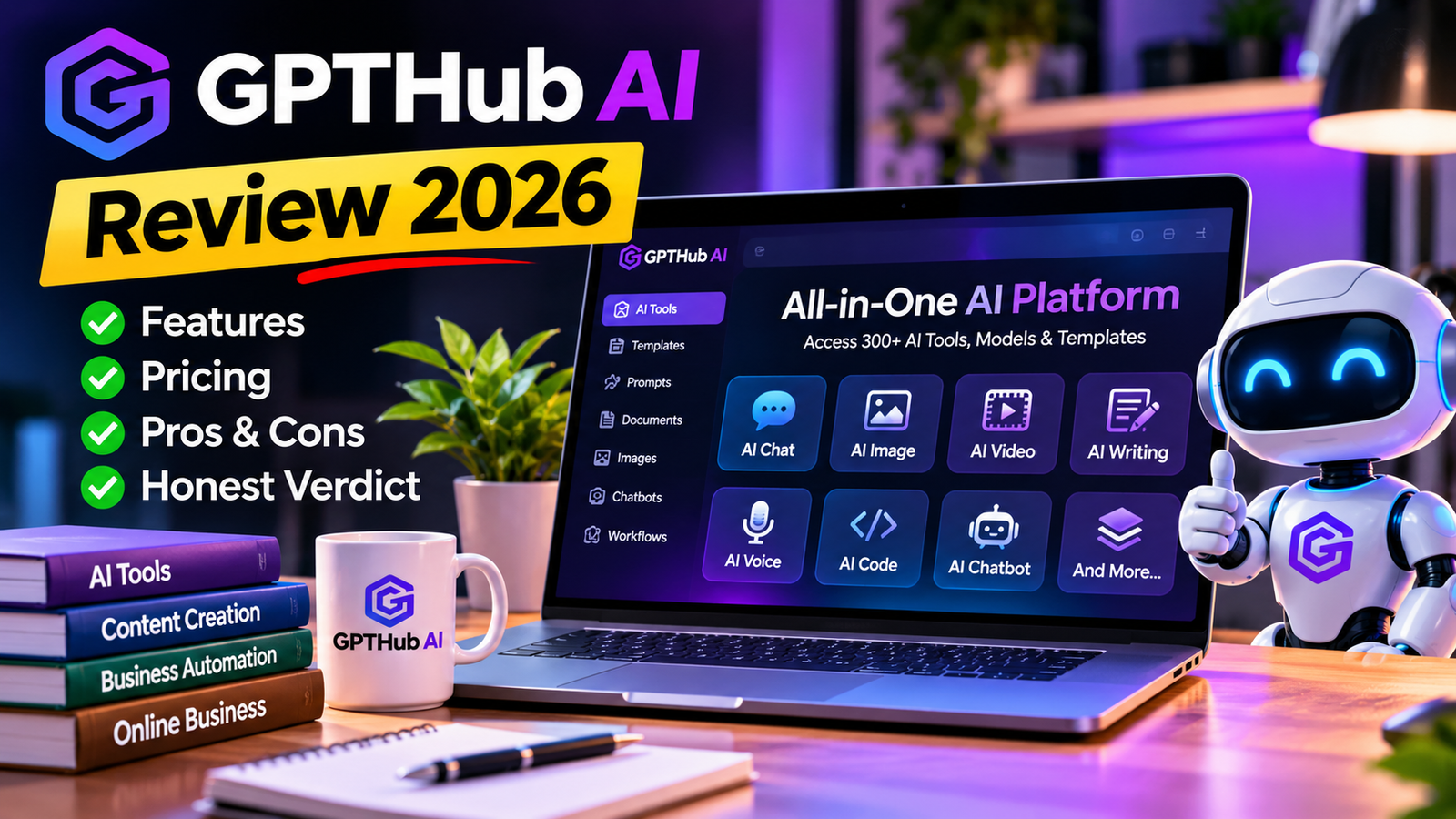
Key Features: What the Offer Appears to Emphasize
1. Multiple model options in one workspace
The main selling point is a central place to select from several AI models. In principle, that can be useful when one model is better at structured writing, another at brainstorming, and another at coding or image tasks. The practical value depends on the actual models available, their version numbers, usage caps, response quality, and whether the base purchase includes them. The sales claims should not be confused with a verified list of currently accessible models.
2. Writing and marketing workflows
Launch coverage positions the product for content and marketing tasks such as sales copy, promotional emails, scripts, advertisements, and business writing. A shared workspace may save time for users who repeatedly create similar materials. However, no independently verified template count, prompt-library size, or quality benchmark was available for this review. Treat specific counts and performance promises as unconfirmed unless the vendor demonstrates them inside the product.
3. Model comparison
Third-party descriptions mention comparing model outputs side by side. If available in the base plan, this could be a useful feature: give two models the same brief, compare clarity and accuracy, and select the stronger draft. Buyers should confirm whether comparison is genuinely simultaneous, whether it consumes separate usage allowances, and whether it is included without an upgrade.
4. Image-generation mode
Promotional materials also mention an image mode. That could make the dashboard more convenient for users who need both written and visual assets. Yet the exact image model, output limits, resolution, commercial rights, and download rules were not independently confirmed. Do not assume that image generation is unlimited or equivalent to a dedicated image platform.
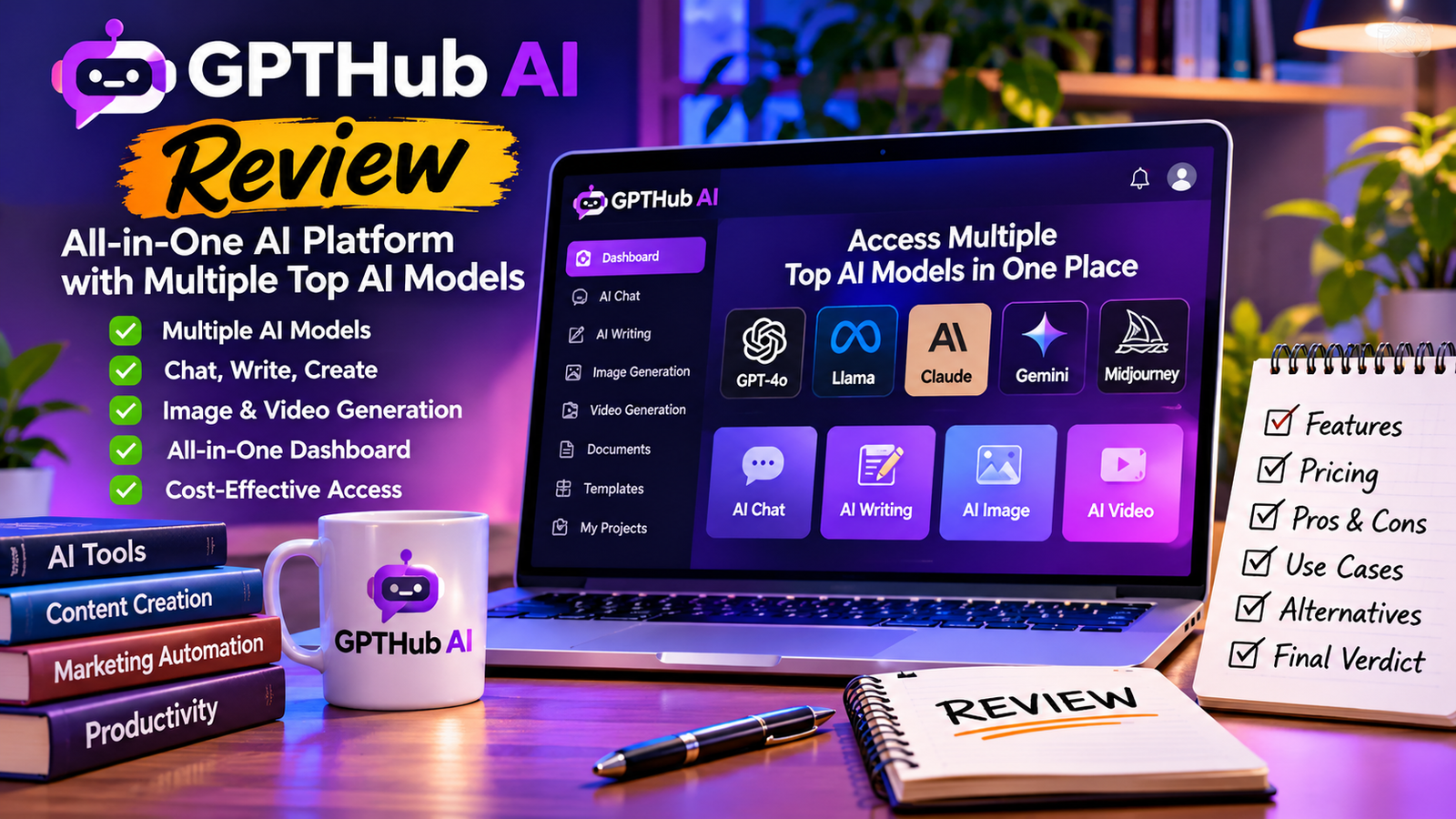
Potential Benefits and Use Cases
Freelancers may use a centralized workspace for proposals, client emails, research outlines, and content drafts. Affiliate marketers may find the advertised writing tasks useful for email drafts, landing-page ideas, ad variations, and social content. Small-business owners can explore it for FAQs, product descriptions, and customer-service drafts, while creators may use writing and image tools during early-stage production. These are potential workflows, not verified performance results.
Pricing, Add-Ons, and What to Check Before Checkout
Pricing information is not fully consistent across the available launch coverage. One detailed third-party review reported a $14.94 one-time front-end checkout total on November 14, 2026, while other launch listings showed different headline prices, including $19 and $12. These are snapshots from third-party sources, not a verified current quote from the official checkout. Your actual price may differ because of promotions, taxes, payment fees, selected order bumps, or changes after launch.
Third-party coverage also reported a $9 VIP add-on and optional upgrades. Exact inclusions and current prices were not independently verified, so check the checkout carefully and decline extras you do not need.
Do not base a purchase on a crossed-out reference price, coupon claim, or “lifetime” headline alone. Confirm the amount charged, whether the order includes an optional add-on, the renewal status, the included usage allowance, and the refund deadline. Save a copy of the checkout page and receipt.
Privacy, API Dependence, and Brand Considerations
GPTHub AI’s published Terms of Service add important detail. They say the platform uses a monthly usage system, that credits or hosting limits reset monthly, and that “unlimited” means high practical usage rather than unrestricted access. The terms also reserve the right to adjust limits. This is more specific than a simple unlimited-use headline, so buyers should check the current account allowance and how it is measured.
The same terms state that the service relies on third-party providers such as AI APIs, and that the operator is not responsible for external downtime or changes in third-party functionality. They describe lifetime as the lifetime of the product, typically three years in the current industry scenario, rather than perpetual service. This is a significant qualification: a one-time payment does not promise unlimited resources or guaranteed access forever. The terms also say the platform may update, modify, or discontinue features.
The terms say users retain ownership of generated content, but the service does not guarantee originality or legal compliance. They do not, in the text we reviewed, provide a detailed data-retention schedule, processing location, or clear statement about model training. Until those details are supplied, avoid submitting confidential customer records, financial data, passwords, or unpublished client material.
OpenAI’s brand guidance says its GPT marks belong to OpenAI and that third parties should not use GPT in app, product, developer, or company names. This is not a legal finding about GPTHub AI, but it is a branding and continuity issue to clarify. Treat the service as independent, not as an official OpenAI product.
Pros and Cons
Potential advantages
- A single dashboard may reduce the need to switch between multiple AI interfaces.
- The advertised mix of chat, writing, and image tools could suit varied content workflows.
- A browser-based service may be convenient for users who work on more than one device.
- Model comparison, if included as described, could help users evaluate different responses.
- The reported launch price is relatively low compared with several separate paid subscriptions, although the current total must be confirmed.
Potential drawbacks and risks
- The official landing page and logged-in product could not be independently inspected during this review.
- Promoted model names and availability were not verified in a live account.
- Privacy, retention, usage limits, and API arrangements need clearer documentation.
- One-time or lifetime access claims depend on the vendor maintaining the service and its provider relationships.
- Reported checkout prices differ across third-party launch sources.
- Optional upgrades may increase the final cost substantially.
- No hands-on performance, uptime, or customer-support test was completed.
GPTHub AI vs. Popular Alternatives
GPTHub AI is positioned as a multi-model convenience layer. The alternatives below are established services with their own interfaces and product ecosystems. They are not identical products, and the right choice depends on whether you value a single third-party dashboard or direct access to a provider’s own tools and account controls.
| Service | Best fit | Key distinction |
|---|---|---|
| GPTHub AI | Users interested in a consolidated AI workspace | Third-party offer; exact model access, limits, privacy, and continuity require confirmation |
| ChatGPT | General AI assistance and OpenAI’s integrated product features | Direct OpenAI service with plan-specific features and usage terms |
| Claude | Writing, analysis, and long-document workflows | Anthropic’s own assistant and account ecosystem |
| Google Gemini | Google ecosystem users and multimodal assistance | Google’s own AI assistant and connected services |
If you already pay for one provider and use its native features heavily, a third-party dashboard may not replace that subscription. If you mainly want to compare model responses in one place, GPTHub AI’s advertised approach may be worth investigating—but only after confirming the exact models and operating terms.
Who Should Consider GPTHub AI?
It may suit people who regularly switch between AI models and want one interface for drafting and ideation. It is a weaker fit for organizations handling sensitive data, teams requiring service-level agreements, or buyers who expect perpetual unlimited use. Those users should prioritize documented privacy, support, and predictable usage terms.
Refund Terms and Buyer Checklist
The published terms state that refund requests must be made within 30 days, but also say refunds are not available if more than 50% of usage limits have been consumed; abuse or misuse can void eligibility. This is more restrictive than a simple unconditional guarantee. Read the full Terms of Service before purchase and contact the vendor through Hypersoft Labs support if anything is unclear.
Before checking out, confirm which models are included in the base plan, current usage limits, whether image generation is included, the final price with add-ons, how the 30-day usage threshold is calculated, and how your prompts are stored or used. Keep the receipt and a copy of the terms shown on the purchase date.
Frequently Asked Questions
Is GPTHub AI an official OpenAI product?
No evidence reviewed establishes that it is. Third-party coverage describes it as an independent dashboard, and launch materials identify separate promoters. Treat it as a third-party service, not as an OpenAI product or endorsement.
Does GPTHub AI include ChatGPT Plus or Pro?
No. A separate dashboard that may connect to models is not the same thing as a ChatGPT subscription. Do not expect the same apps, account benefits, tools, or usage terms.
What does GPTHub AI cost?
Third-party launch coverage reported different front-end prices, including a $14.94 checkout snapshot. This is not a guaranteed current price. Check the live order form and final payment summary.
Are all advertised models included?
That could not be confirmed. Ask for a written list of the models included in the base purchase and identify any that require an upgrade.
Can I use GPTHub AI for commercial projects?
Do not assume commercial rights from general marketing language. Review the license and ask the vendor to confirm client work, resale, and output ownership in writing.
Is GPTHub AI safe for confidential information?
The terms we reviewed do not give a detailed retention or training policy. Avoid entering sensitive information until the vendor provides those details in writing.
Does it offer lifetime access?
The terms define lifetime as the product’s lifetime and say this is typically three years in the current industry scenario. They also state that monthly usage limits apply and that the service relies on third-party providers.
Was GPTHub AI tested hands-on for this review?
No. We could not access a live account or verify its actual output quality, speed, uptime, or support response. This review is a research-based assessment of available claims and risks.
Final Verdict: Verify the Details Before You Commit
GPTHub AI has an appealing concept: one browser-based workspace for multiple AI models and creative tasks. If the advertised dashboard, model choices, and comparison tools work as described, it could offer convenience to freelancers, marketers, and creators who move between AI workflows throughout the day.
However, the information available for this review leaves important questions unanswered. We could not inspect the official landing page or a live account, and the public launch information does not independently prove the model lineup, usage limits, privacy protections, or long-term availability. Reported prices also vary between third-party sources. These are not minor details; they determine whether the product is useful and whether the offer represents good value.
Our recommendation: treat GPTHub AI as a product to investigate rather than an automatic replacement for established AI subscriptions. Before purchasing, confirm the exact base-plan features, current checkout total, data policy, refund terms, usage caps, and the meaning of lifetime access. Start with non-sensitive tasks and test the service promptly if you decide to buy. If the vendor cannot provide clear written answers, consider using a provider’s direct service instead.
Check the current offer: View GPTHub AI through the affiliate link. Review the order summary and terms before completing a purchase.
Affiliate Disclosure
Top10ReviewPoint may receive a commission if you purchase GPTHub AI through the affiliate link in this article. This does not increase your price. Our review aims to distinguish promotional claims from independently verified information. We did not receive verified hands-on access for this assessment, and we do not guarantee results, model availability, or uninterrupted service.