
Post-Apocalyptic Survival Stories is promoted as a browser-based creative tool for writers developing fiction about life after a major societal collapse. It organizes survival-fiction ideas into categories and prompts, then helps users turn them into structured story instructions and connected series. For independent authors, this may be useful when finding fresh premises and maintaining direction across several stories becomes difficult.
One distinction matters before buying. Available product coverage most consistently describes the standard app as a prompt-generation and story-planning workspace that prepares instructions for an external AI writing service, rather than a standalone AI model that independently writes and publishes finished books. Another review describes a more automated agent-based workflow. Because the official sales page could not be independently retrieved, we cannot confirm that difference from current vendor documentation.
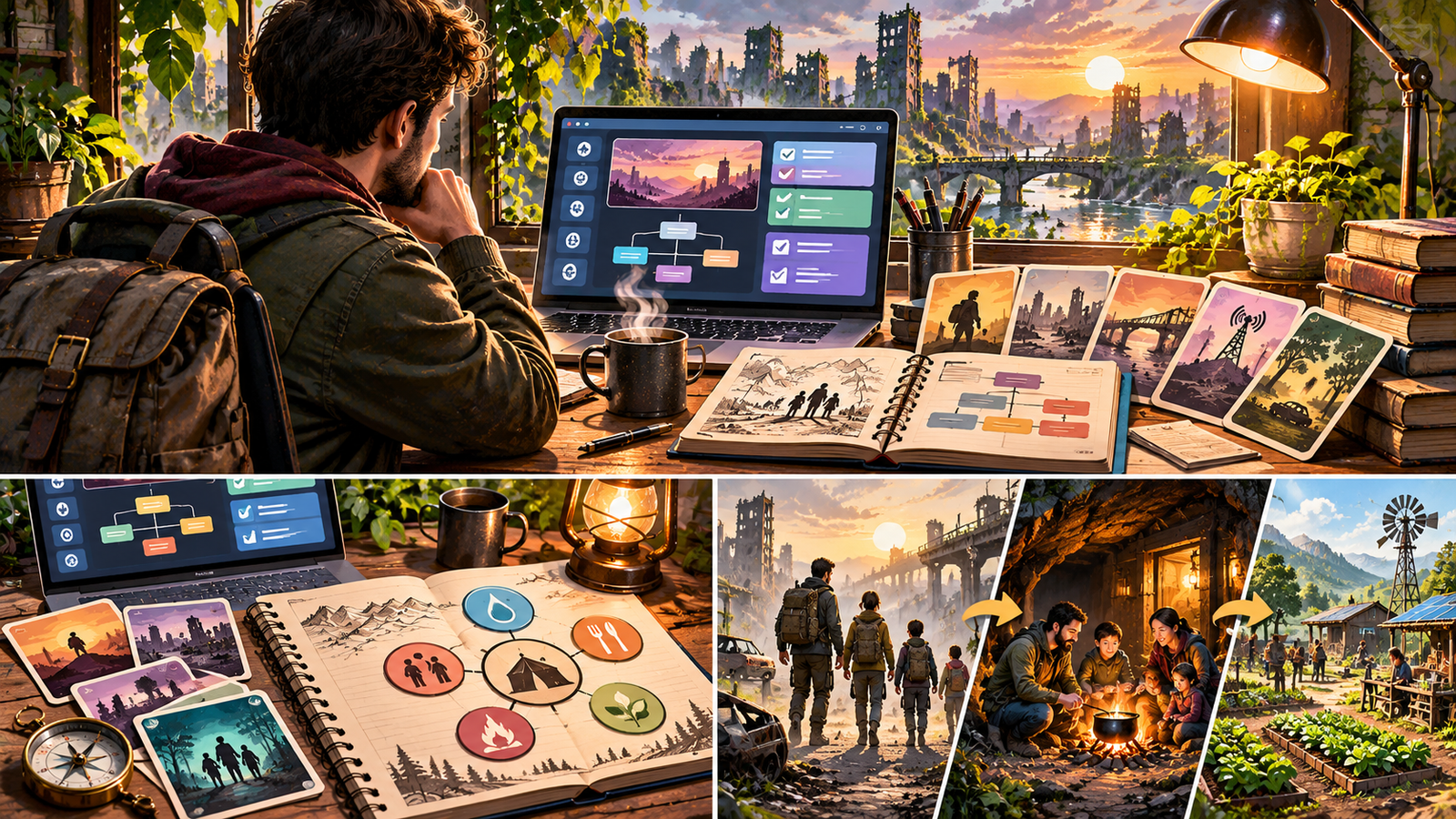
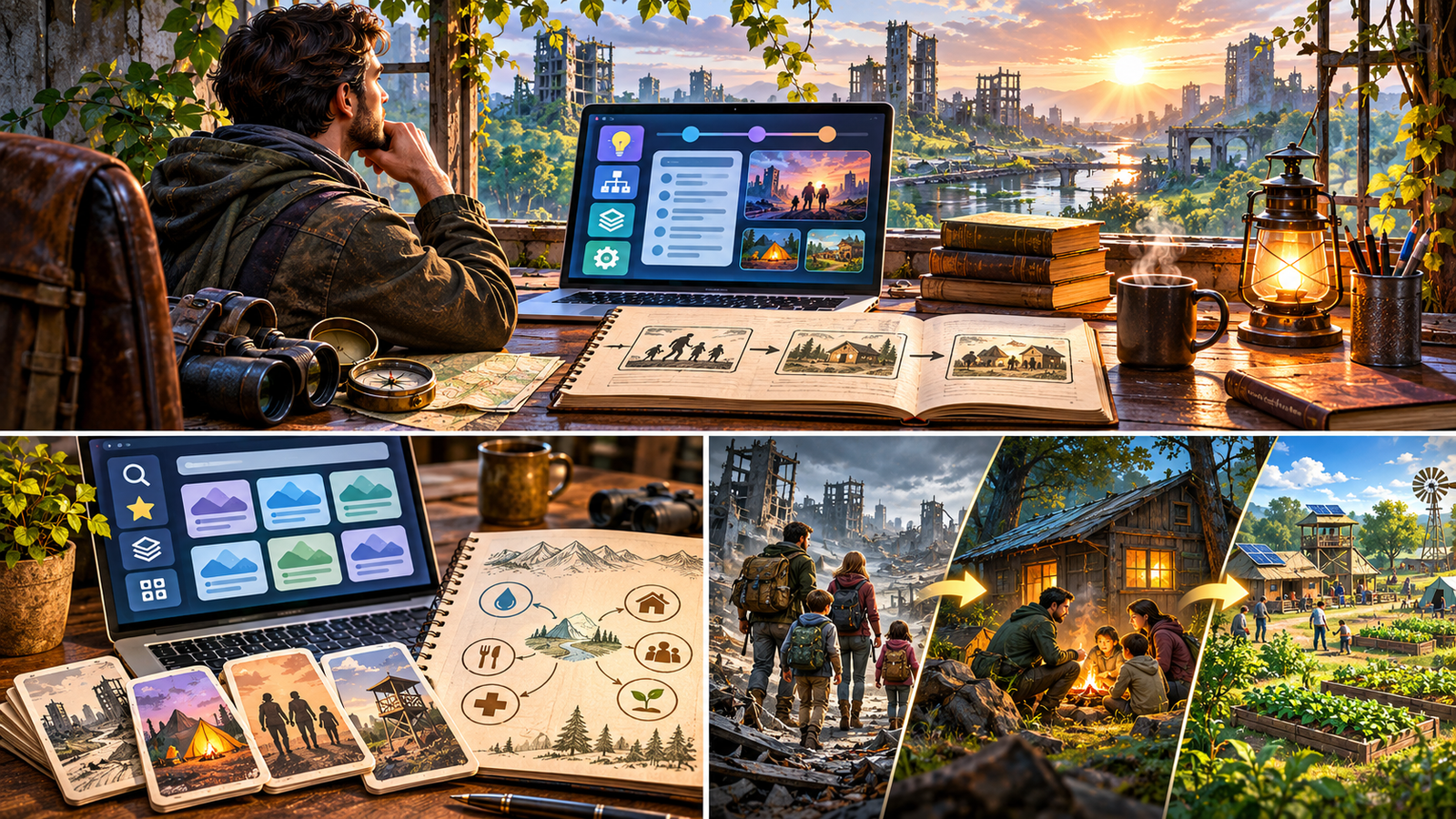
This review is based on the supplied product URL, which returned a cache-miss error, plus publicly available launch coverage and product descriptions. We did not log in, generate a story, test a reseller account, or verify the current checkout. The images are original conceptual illustrations, not screenshots of the application.
Post-Apocalyptic Survival Stories at a Glance
- Product type: Cloud-based survival-fiction prompt and story-planning app
- Audience: Fiction writers, short-read publishers, and digital product resellers
- Standard edition reported: One profile, 30 categories, and 300 prompts
- Story planning: Customizable prompts and Saga Creation for connected stories
- External AI: ChatGPT or Claude is described as part of the writing workflow
- Access: Browser-based; no desktop installation described
- Current price: Not independently verified
- Testing: Not hands-on tested
What Is Post-Apocalyptic Survival Stories?
Post-Apocalyptic Survival Stories is a niche-specific writing aid for fiction set after civilization has been disrupted or collapsed. A user chooses a survival-related category and prompt, adjusts story preferences, and generates a more detailed instruction set for an AI writing platform.
The reported standard edition contains one storytelling profile, 30 categories, and 300 prompts. Themes go beyond combat and disaster action. Examples include finding clean drinking water, locating food in abandoned places, protecting elderly survivors, raising children after the collapse, living without electricity, building makeshift shelters, managing food supplies, coping with grief, and preserving family traditions.
This human-centered angle may appeal to authors who want emotional survival fiction rather than only battles, raiders, or monsters. A story about neighbors preserving a holiday tradition after a collapse can create a very different experience from a high-action escape narrative.
The product is described as a cloud app rather than a static PDF prompt pack. A searchable interface with saved favorites and adjustable preferences could be easier to reuse than a document of fixed prompts.
How the Reported Workflow Works
- Choose a category: Browse survival-fiction themes and select a situation.
- Select a prompt: Choose a starting premise from the library.
- Customize: Adjust preferences such as point of view, tone, and the type of survivor at the center of the story.
- Generate instructions: The app prepares a tailored prompt from the selected idea and preferences.
- Continue with an AI service: Available descriptions recommend ChatGPT Work or another capable model such as Claude to develop an outline and draft.
- Review and edit: Check continuity, pacing, character behavior, and prose before publication.
Launch coverage also describes a Saga Creation mode for developing three connected stories. Another review refers to specialized agents for world-building, characters, outlining, and prose. We could not confirm whether these agents operate inside the app or are part of the external AI workflow. Check the current vendor demo and manual before assuming the software writes a complete manuscript autonomously.
Key Features and Potential Uses
1. A library of 300 prompts
The reported 300 prompts across 30 categories give writers a structured starting point within one genre. Topics around food, water, shelter, family, health, weather, and community can help authors explore different emotional and practical sides of a collapsed world. Check whether prompts lead to genuinely different conflicts, characters, and outcomes or repeatedly produce similar scenarios with names changed.
2. Customizable story preferences
Available descriptions mention controls for point of view, tone, and the kind of survivor who leads the story. These options can help writers approach the same category differently. A clean-water premise might become a tense first-person thriller, a reflective family drama, or a hopeful community-rebuilding narrative. Customization does not guarantee originality; writers still need to shape the premise and avoid imitation of existing works.
3. Saga Creation for three connected stories
Saga Creation is described as a feature for turning one premise into three connected stories, with characters and stakes continuing across a trilogy. This may help authors plan a sequence instead of treating every short story as isolated. Each installment still needs its own meaningful conflict and resolution while contributing to a larger arc. Check whether the generated plan preserves character details, world rules, and unresolved plot threads across all three parts.
4. Search and saved favorites
Launch descriptions report search and favorites for organizing prompts. Search can make a larger library more practical when a writer wants a particular theme, such as winter survival or food preservation. These are convenience features, not a complete project-management system. Authors managing several books may still need a separate story bible or writing planner.
5. Browser access and an in-app manual
The product is described as a cloud app that runs in a browser, with no software installation required. Launch coverage also mentions an in-app user manual. Browser access can be convenient across computers, but it depends on the vendor maintaining its hosting and account system. Confirm supported browsers, whether internet access is always required, how favorites are saved, and whether prompts can be exported or backed up.
6. Reseller license option
Some launch information describes a Reseller License that lets buyers offer access to the hosted application through a reseller link. Reported terms say the reseller retains resale rights while each customer receives a personal-use license, with a stated minimum resale price of $14. This may interest marketers who already reach fiction writers or digital-product buyers.
Read the actual license carefully. Confirm permitted sales channels, pricing rules, customer support responsibilities, promotional restrictions, and what happens if the vendor discontinues the app. Do not assume a reseller license grants ownership of the software, source code, or unrestricted redistribution rights.
Potential Benefits for Writers and Publishers
- Less blank-page friction: A categorized library can move a writer from a broad genre idea to a specific premise.
- Genre focus: Survival-fiction prompts may be more relevant than a generic writing prompt collection.
- Series planning: Saga Creation is intended to help connect three stories around one premise.
- Reusable organization: Search and favorites may make it easier to revisit promising concepts.
- Flexible writing workflow: The reported process can use an external AI service rather than one proprietary writing model.
- Possible reseller use: A separate reseller license may suit marketers with an established audience.
These are potential advantages based on available descriptions, not proof of reader demand, sales, or guaranteed publishing income.
Limitations and Questions to Consider
It may not write a finished book by itself
The most important buying question is what the app actually generates. One source describes a prompt and planning app for use with ChatGPT or Claude; another describes an agentic story-writing system. Until a current vendor demonstration confirms the workflow, the safer expectation is that users may need a separate AI writing service and their own editing process.
External AI access may add cost
If the workflow relies on ChatGPT, Claude, or another model, check which plan or usage limits are required. Do not assume that purchasing this app includes an AI subscription or unlimited manuscript generation. The current sales page did not load, so the exact requirements remain unverified.
AI drafts still need human editing
Survival fiction depends on believable decisions, practical constraints, emotional stakes, and consistent world rules. An AI-assisted outline can still contain implausible choices, repetitive scenes, continuity errors, or weak dialogue. Revise the prose to establish a distinctive voice and check factual details where real-world survival information appears.
Cloud access and reseller terms need scrutiny
A hosted app depends on the vendor maintaining its service. Ask how long access lasts, whether updates are included, whether usage is capped, and whether saved prompts can be exported. Resellers should understand who handles billing, refunds, technical support, and customer access.
Pricing: What Can Be Confirmed?
Current pricing could not be verified because the supplied sales URL did not load. Launch coverage published around October 30, 2026 reported a $9 Personal License and reseller pricing starting around $16, with a promotion stated to end November 2, 2026. That promotion date has passed, so those figures are historical launch information—not a current offer.
The same launch coverage described optional upgrades. The Advantage edition was reported to add a second profile for wasteland exploration and dangerous journeys, bringing the library to 60 categories and either 600 or 1,192 prompts depending on the version. A Pro edition was reported to add profiles for deadly competitions and post-apocalyptic crime or detective stories, with 120 categories and either 2,392 or 4,774 prompts depending on the variant. Prices varied by license and offer tier.
These upgrade details come from third-party launch coverage and have not been confirmed against a live checkout. Before buying, check the current front-end price, upgrade names, one-time versus recurring billing, reseller minimum price, refund policy, and exact prompt counts in the order funnel.
Who Should Consider It?
Fiction writers who struggle with idea generation may appreciate a categorized library, especially if they already know how to develop a premise into characters, conflict, and a satisfying ending. Short-read and Kindle publishers may be interested in repeatable story planning and trilogy development. Create and edit a sample first, then assess whether its length, genre conventions, and manuscript format fit your intended audience.
Newsletter and serial-fiction creators could use the categories as inspiration for recurring installments. A consistent schedule still requires editing, cover art, audience research, and a clear series identity. Digital-product resellers may want to investigate the reseller license if they have an established audience for writing tools. Calculate acquisition costs and support obligations instead of assuming resale rights automatically create profit.
Writers expecting a one-click finished novel may be disappointed if the product primarily generates prompts and plans. Confirm the workflow first if you expect complete manuscript generation inside the app.
Alternatives Worth Comparing
This product is positioned around one fiction genre and a prompt-driven workflow. Other tools may suit writers who need more general worldbuilding, interactive story creation, or quick story drafts.
- StoryDev: Its post-apocalyptic story page emphasizes worldbuilding, factions, causes of collapse, and a visual canvas. Compare it if you want more direct world organization.
- Talefy: Offers a post-apocalyptic story category and customizable settings, characters, and goals. It may suit writers who prefer an interactive story environment.
- VidsHero: Provides a free short-story generator and can connect scripts to a video workflow. It serves a different use case from planning a longer Kindle series.
These are not exact feature-for-feature replacements. Compare current limits, export options, ownership terms, AI usage requirements, and prices on each official site before choosing.
Practical Checklist Before Publishing AI-Assisted Fiction
- Use the app to develop a premise, then revise generic elements into a distinctive concept.
- Record important characters, world rules, locations, resources, and timeline details.
- Review the outline before drafting and check that each chapter advances the central conflict.
- Check continuity across installments if using Saga Creation.
- Revise dialogue, pacing, descriptions, and emotional moments instead of publishing raw output.
- Avoid protected characters, settings, or recognizable storylines from existing franchises.
- Format the final manuscript using the requirements of your publishing platform.
- Read the product license and external AI service terms before commercial use.
Frequently Asked Questions
Is it an AI writing model?
Available coverage most consistently describes a cloud-based prompt and story-planning app that prepares instructions for an external service such as ChatGPT or Claude. Another review describes a more automated agent workflow, but we could not confirm that from the inaccessible official page.
How many prompts are in the standard edition?
Third-party launch descriptions report one profile, 30 categories, and 300 prompts. Confirm the current version and exact contents at checkout.
Can it help plan a trilogy?
Saga Creation is described as a feature for developing three connected stories from one idea. We have not tested its ability to maintain continuity across all three installments.
Do I need ChatGPT or Claude?
Available descriptions recommend an external AI writing service for developing generated prompts into outlines and prose. Confirm the vendor’s current instructions and any subscription requirements.
Does it include reseller rights?
A separate Reseller License is described in launch coverage. Confirm the exact rights, restrictions, customer license, and minimum resale price in the actual license.
What is the current price?
We could not verify the current checkout. The reported $9 personal launch price and reseller offers were tied to a promotion ending November 2, 2026, so they should not be assumed to remain available.
Has Top10ReviewPoint tested the app?
No. This review is based on available product descriptions and launch coverage. We did not log in, generate prompts, test external AI handoffs, or verify reseller access.
Final Verdict: Is Post-Apocalyptic Survival Stories Worth Considering?
Post-Apocalyptic Survival Stories has a clear niche: help writers develop fiction about survival, relationships, and rebuilding after societal collapse. The reported 300 prompts across 30 categories, adjustable preferences, searchable favorites, Saga Creation, and browser access could make it a useful starting point for authors who want more structure than a generic prompt document.
The main uncertainty is the exact role of the software. Available descriptions differ on whether it primarily prepares prompts for an external AI writer or includes a more autonomous drafting workflow. Current pricing, upgrade contents, external AI requirements, and reseller terms also remain unverified because the official sales page could not be retrieved.
Our recommendation: Consider it if you write survival fiction, enjoy editing AI-assisted drafts, and want a focused idea library with trilogy planning. Do not buy it expecting guaranteed finished books, automatic KDP success, or effortless reseller income. First inspect a current demo, confirm whether an external AI subscription is required, read the license, and verify the checkout price. If you need deeper worldbuilding or a more interactive writing environment, compare StoryDev and Talefy before deciding.
Affiliate Disclosure
This article contains an affiliate link. If you purchase through our link, Top10ReviewPoint may earn a commission at no additional cost to you. Our review aims to distinguish available product information from unverified claims. Prices, upgrades, access terms, and license conditions may change, so confirm all details with the vendor before purchasing.